



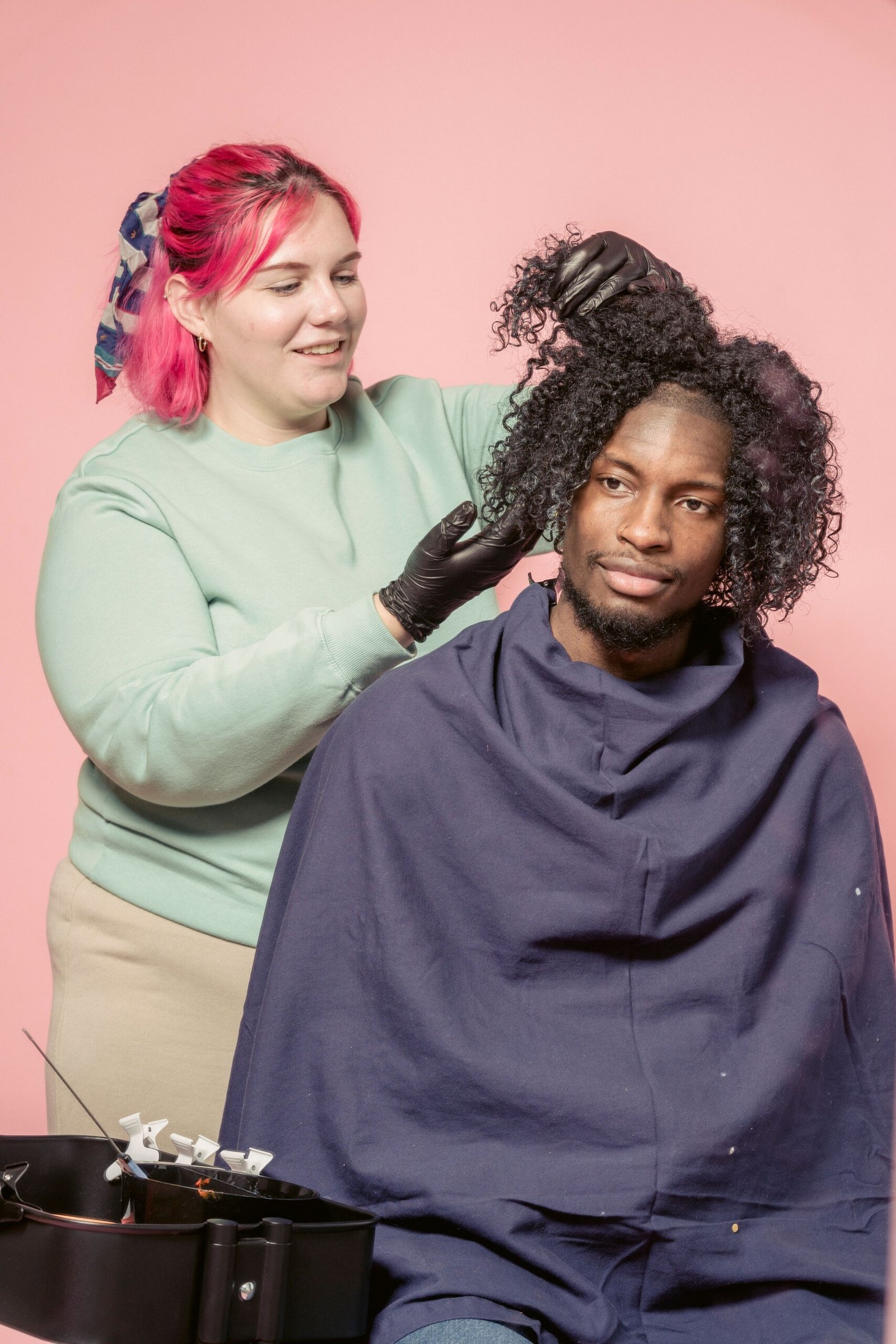

4A and 3C hair have tight, beautiful curl patterns, but 4A and 3C hair are not exactly the same. Understanding the difference between 4A and 3C hair can help you choose suitable hairstyles, hair care products, and daily routines for 4A and 3C hair. While 3C hair usually has springy corkscrew curls, 4A hair often has smaller, tightly defined coils that are common in 4A and 3C hair types.
In this guide, you will learn how to identify your curl pattern, care for your natural hair, manage shrinkage, and choose suitable hairstyles. You will also learn what Type 4 hair means and discover hairstyle ideas for different curl patterns.
What Are 4A and 3C Hair Types?
The hair typing system groups natural curl patterns into four main categories: Type 1 straight, Type 2 wavy, Type 3 curly, and Type 4 coily. Each category includes smaller types, such as 3A, 3B, 3C, 4A, 4B, and 4C.

What Is 3C Hair?
3C hair features tight, springy corkscrew curls. The curls often have a small circumference and form visible spirals. This hair type can have plenty of volume, although the amount depends on individual hair density and texture.
What Is 4A Hair?
4A hair usually has tightly packed, S-shaped coils. These coils can form a compact pattern and may shrink noticeably when the hair dries. Gentle handling, conditioning, and suitable styling products can help maintain curl definition.
4A and 3C Hair: What Are the Main Differences?
The main difference between 4A and 3C hair is the shape and size of the curl pattern. However, individual hair can have more than one pattern.
| Feature | 3C Hair | 4A Hair |
|---|---|---|
| Curl pattern | Springy corkscrew curls | Tightly defined S-shaped coils |
| Curl size | Usually larger spirals than 4A | Usually smaller, compact coils |
| Appearance | Defined curls with bounce | Dense-looking coils with a compact pattern |
| Shrinkage | Can be noticeable | Can also be significant |
| Care focus | Moisture, definition, gentle detangling | Moisture, gentle handling, coil definition |
These are general differences rather than strict rules. Hair density, porosity, length, and styling methods can affect how each curl pattern looks.
Curl Pattern and Definition
When comparing 4A and 3C hair, look at the natural shape of your curls after washing and conditioning. Type 3C curls often form spirals, while Type 4A hair commonly forms smaller S-shaped coils.
Hair Density and Volume
Both curl patterns can look full, but density varies from person to person. Density describes how many strands grow on your scalp, while strand thickness refers to whether individual strands are fine, medium, or coarse.
Hair Shrinkage
Hair shrinkage in 4a and 3c hair happens when curly or coily hair looks shorter as it dries and returns to its natural pattern. Both 3C and 4A hair types in the 4a and 3c hair category may experience shrinkage.
How to Tell If You Have 3C or 4A Hair
Look at Your Natural Curl Pattern
Wash your 4a and 3c hair, apply conditioner, and allow your 4a and 3c hair to dry without pulling or stretching the strands. Observe whether you see springy corkscrews for 3C or smaller, tightly packed coils for 4A, which is common in 4a and 3c hair.
Check Your Hair When Wet
Wet hair may show its curl pattern more clearly, but products and styling techniques can change its appearance. Avoid relying on only one observation.
Remember That You Can Have Multiple Curl Patterns
Some people have 3C curls in one area and 4A coils in another. This is normal. Choose your hair care routine according to how your hair behaves rather than trying to fit every strand into one category.
What Is Type 4 Hair?
If you are searching for what is type 4 hair, it refers to a group of naturally coily hair patterns, including 4A, 4B, and 4C. These patterns differ in their shape, definition, and how tightly the strands coil.
Type 4 hair can have visible coils, zigzag patterns, or a mixture of both. It may also shrink considerably when dry. Not everyone with Type 4 hair has the same needs, so it is useful to consider porosity, density, strand thickness, and how your hair responds to products.
Understanding 4C Hair
4C hair is generally associated with a very tight coil or zigzag pattern. Its curl definition may be less visible without styling, and shrinkage can make the hair appear much shorter than its stretched length.
People with long 4c hair may notice that their hair looks considerably shorter when it returns to its natural pattern. Gentle detangling, conditioning, and low-tension hairstyles can help make length easier to manage.
Daily Care Routine for 3C Hair
Cleanse Gently
Use a shampoo that cleans your scalp without leaving your hair feeling excessively dry. Choose your washing frequency according to your scalp and styling routine.
Condition and Detangle
Apply conditioner to help soften the strands. Detangle gently with your fingers or a suitable wide-tooth comb, working in small sections and starting near the ends.
Use Leave-In and Styling Products
A leave-in conditioner or curl cream may help improve softness and definition. Apply products evenly and adjust the amount according to your hair’s thickness and porosity.
Refresh Your Curls
Between wash days, lightly dampen your hair and use a small amount of your usual styling product if needed. Avoid adding too much product, which can leave buildup.
Daily Care Routine for 4A Hair
Focus on Conditioning
Conditioning can help improve softness and make tightly coiled hair easier to detangle. Work in sections so that each part of your hair receives attention.
Try Suitable Moisturising Products
When choosing 4c hair moisturisers, remember that a product marketed for 4C hair may also work for some people with 4A or 3C hair. Look for a conditioner or leave-in product that suits your hair’s needs instead of choosing it only because of its label.
Protect Your Hair at Night
A satin or silk bonnet, scarf, or pillowcase can reduce friction while you sleep. Loose twists or other gentle nighttime styles may also help keep your hair manageable.
Best Hairstyles for 3C and 4A Hair
Both curl patterns in 4a and 3c hair can work with many hairstyles like twa hair. The best choice for your 4a and 3c hair depends on your preferred look, hair length, and how much styling time you have.
Hairstyles for 3C Hair
- Wash-and-go curls
- Twist-outs
- Braid-outs
- Half-up, half-down styles
- Loose buns and ponytails
Hairstyles for 4A Hair
- Two-strand twists
- Twist-outs and braid-outs
- Flat twists
- Bantu knots
- Gentle protective styles
TWA Hair and TWA Hairstyles
TWA hair means “teeny weeny afro.” It usually describes a short natural afro, often worn after a big chop or during the early stages of growing natural hair.
Popular TWA hairstyles include a shaped mini afro, a side-parted short afro, defined coils, and simple styles created with a headband. You can use a small amount of styling cream or leave-in conditioner to help shape your hair without making it feel heavy.
Best Products for 3C and 4A Hair
There is no single product that works for everyone with the same curl type. Consider how your hair feels after washing, how quickly it absorbs products, and whether it becomes weighed down easily.
Products for 3C Hair
A gentle shampoo, conditioner, leave-in conditioner, and curl-defining product may be useful. Lightweight formulas can suit hair that loses volume when heavier products are applied.
Products for 4A Hair
A conditioner, leave-in product, and styling cream may help with softness and manageability. If your hair feels dry between wash days, review your cleansing and conditioning routine before adding several new products.
Why Hair Porosity Matters
Hair porosity describes how readily your hair takes in and retains moisture. Two people with the same curl pattern may respond differently to the same product. Adjust your routine based on your own results.
4A And 3C Hair Extensions: What Should You Know?
If you are considering curly hair extensions, compare the extension pattern with your natural curl pattern. Some products are labelled 3C or 4A, but curl patterns and textures can vary between brands.
Check product photographs, texture descriptions, and care instructions before choosing extensions. Extension length is often measured while the hair is stretched, so the visible length may look shorter when the curls are allowed to shrink naturally.
Common Mistakes to Avoid With 3C and 4A Hair
- Using too much product: Excess product can cause buildup and make curls feel heavy.
- Detangling roughly: Work in sections and avoid forcing a comb through knots.
- Comparing your hair with others: Curl patterns, density, and shrinkage vary naturally.
- Choosing products by curl type alone: Consider porosity, strand thickness, and how your hair responds.
- Keeping tight hairstyles for too long: Choose comfortable styles that do not place excessive tension on your hair.
Frequently Asked Questions
Is 4A hair tighter than 3C hair?
Generally, 4A hair has smaller, more compact coils than 3C hair, which usually forms springy corkscrew curls. Individual patterns can vary.
Can someone have both 3C and 4A hair?
Yes. A person can have different curl patterns across the scalp, including a combination of 3C and 4A.
Does 4A hair shrink?
Yes, 4A hair can shrink as it dries and returns to its natural coil pattern. The amount differs between individuals.
Is 4C hair the same as 4A hair?
No. Both belong to Type 4, but 4A commonly forms S-shaped coils, while 4C often has a tighter coil or zigzag pattern with less obvious definition.
How often should I wash 3C or 4A hair?
There is no fixed schedule for everyone. Consider your scalp, activity level, product buildup, and how your hair feels. Adjust your routine as needed.
Can I use the same moisturiser for 3C and 4A hair?
Possibly. The best choice depends on your hair’s porosity, strand thickness, and response to the formula rather than curl type alone.
Final Thoughts
Understanding 4A and 3C hair can make it easier to identify your curl pattern and build a practical hair care routine. Focus on gentle cleansing, conditioning, careful detangling, and hairstyles that suit your daily life.
Whether you have springy 3C curls, compact 4A coils, or a mixture of patterns, pay attention to what works for your own hair. Consistent care and suitable styling choices matter more than fitting every strand into one category.

1 Comment
[…] this guide, you will discover different short choppy haircuts, styling ideas, tips for choosing a suitable cut, and simple ways to maintain your […]